On November 05, 2026, SFC Chairman Dr Kelvin Wong delivered a keynote at the PWMA Wealth Management Summit 2026 arguing that in an AI-driven world where information becomes commoditised, human judgment and trust become the scarce differentiators for wealth managers. He highlighted Hong Kong's approximately US$2.9 trillion AUM position as the world's largest cross-border wealth hub and noted Boston Consulting Group projects around 9% annual growth through 2030.
This article was generated using SAMS, an AI technology by Timothy Loh LLP.
SPOTLIGHT ON

FAMILY OFFICES
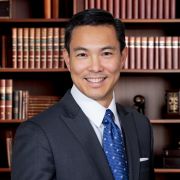
On November 05, 2026, Dr Kelvin Wong, Chairman of the Securities and Futures Commission (""SFC""), delivered a keynote address entitled "When Information Is Abundant, Judgment Becomes Scarce: AI, Trust and the Future of Private Wealth Management" at the Private Wealth Management Association ("PWMA") Wealth Management Summit 2026. The full text was subsequently published on the SFC website under its "Published resources > Speeches" section.
Central Thesis: Information Abundance and the Scarcity of Judgment
Dr Wong's address advanced a foundational proposition for the wealth management industry: as artificial intelligence progressively commoditises access to information, judgment — not data — has emerged as the scarce asset. He observed that contemporary AI systems are capable of retrieving previously inaccessible information instantaneously, completing analytical work in seconds rather than hours, drafting financial plans and investment rationales, analysing portfolios, and automating substantial portions of client servicing. The critical question he posed to wealth managers was whether competitive advantage could be sustained when all market participants have access to equally powerful technology. His answer was unequivocal: differentiation would derive not from superior tools per se, but from the quality of questions asked, the exercise of professional judgment, and ultimately the trust earned with clients.
The Irreplaceability of Human Responsibility
Dr Wong identified a structural paradox inherent in increasing machine capability: as AI systems grow more sophisticated, human judgment becomes correspondingly more valuable. He stressed that wealth management engagements are not reducible to information delivery; they encompass consequential choices regarding risk tolerance, maintaining investment positions through market downturns, inter-generational transfer of assets, succession planning, philanthropy and legacy structuring — all against a backdrop of simultaneous shifts in geopolitics, technology and capital markets. While AI may analyse such questions, generate scenarios, identify probabilities and recommend courses of action, it cannot assume responsibility for the consequences thereof; that obligation remains inherently human.
Market Disruption Signals and Regulatory Readiness
In addressing commercial implications, Dr Wong referenced an earlier event in 2026 whereby a small US-based fintech firm announced an AI-powered tax-planning feature, resulting in the immediate loss of more than USD 140 billion from the aggregate market capitalisation of several listed wealth management firms. He further noted that the SFC's Large Firm AI Readiness Survey, released earlier that same week, indicated that nearly all surveyed institutions anticipated a material acceleration in their deployment of AI over the forthcoming year, while simultaneously identifying accountability frameworks, meaningful human oversight mechanisms and external dependencies as principal challenges requiring active management.
Structural Transformation: From Bandwidth Constraints to Scalable Knowledge
Dr Wong observed that for decades, wealth management had been fundamentally constrained by finite human bandwidth — a limited number of clients assignable per manager and the bounded hours available to highly skilled professionals. He posited that AI initiates the removal of this constraint by enabling firms to scale institutional knowledge, automate routine processes, and redeploy personnel toward higher-value activities. However, he cautioned that the operative challenge is not mere technological implementation but genuine organisational transformation, necessitating concurrent investment in both technology infrastructure and human capital. His articulated vision for the future wealth manager was that of a "conductor of technology" — one who permits machines to execute tasks within their optimal parameters while concentrating human effort on complex decision-making, behavioural coaching, succession planning, inter-generational wealth transfer, and the cultivation of enduring client relationships.
Redefining Alpha in an AI-Saturated Market
On the subject of alpha generation, Dr Wong contended that when all participants possess access to powerful technology and abundant information, informational superiority ceases to be a differentiating factor. He argued that sustainable competitive advantage will instead arise from formulating superior questions, interpreting identical data through distinct analytical lenses, exercising more rigorous judgment, and occasionally demonstrating the conviction to investigate areas where consensus attention is absent — in his formulation, alpha frequently commences precisely at the point where consensus terminates.
Hong Kong's Strategic Position and Projected Growth Trajectory
Turning to Hong Kong-specific considerations, Dr Wong noted that the territory presently constitutes the world's largest cross-border wealth hub, with approximately USD 2.9 trillion in assets under management — a position underpinned by deep connectivity with Chinese Mainland (which already accounts for more than half of private wealth-management AUM in Hong Kong), robust market infrastructure, and a regulatory framework designed to balance innovation with integrity. He further identified several structural trends shaping the sector: expanding family offices presenting sophisticated requirements across investment management, succession planning, governance and philanthropy; increasing significance of alternative investments in portfolio construction; the emergence of digital assets as an additional diversification avenue within a regulated ecosystem; and next-generation clients carrying materially different expectations regarding technology integration and adviser interaction. He cited the PWMA's 2025 industry report identifying AI and digitalisation as the foremost client investment theme, and referenced Boston Consulting Group projections indicating that Hong Kong's cross-border wealth is expected to grow at approximately nine per cent annually through 2030.
Concluding Remarks: Trust as a Differentiated Advantage
In concluding his address, Dr Wong reaffirmed his central thesis — not as an argument against AI adoption but as an imperative to embrace it while maintaining clarity regarding who formulates the questions, exercises judgment and bears responsibility for consequences. He stated that private wealth management is, at its core, the stewardship of individuals' confidence in decisions bearing upon their future; such confidence cannot be generated by algorithm alone but must be earned through practitioners who understand clients, exercise sound professional judgment and accept accountability for advice rendered. With respect to Hong Kong specifically, he contended that the imperative is not a binary choice between technology and human expertise but rather the integration of both — converting abundant information into superior judgment, superior judgment into deeper trust, and deeper trust into enduring value creation. He characterised the trust vested in local markets, institutions and regulatory frameworks — accumulated over decades and materially more difficult to replicate than capital or connectivity — as Hong Kong's principal differentiated advantage. The SFC affirmed its readiness to support this trajectory through balanced regulation, responsible innovation and continued partnership with industry participants.
View the full article:Source