On October 13, 2026, Dr Kelvin Wong delivered keynote remarks at IOSCO World Investor Week 2026 on 'Honing Investor Judgement in an Age of Digital Deception,' highlighting that US cyber-fraud losses exceeded US$17 billion in 2025 and average online investment scam losses in Hong Kong reached around HK$700,000 per case. He proposed three habits—practise, pause, question—to strengthen investor judgement amid AI-driven deception.
This article was generated using SAMS, an AI technology by Timothy Loh LLP.
SPOTLIGHT ON

FAMILY OFFICES
Event Overview
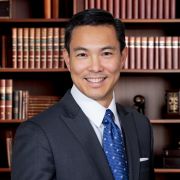
On October 13, 2026, Dr Kelvin Wong delivered the keynote address entitled 'Honing Investor Judgement in an Age of Digital Deception' at the IOSCO World Investor Week 2026 – Strike the Gong for Financial Literacy event. The tenth iteration of this global initiative was jointly hosted by Hong Kong Exchanges and Clearing Limited, the Investor and Financial Education Council, CFA Institute, and CFA Society Hong Kong. Dr Wong extended his gratitude to all co-hosts for their sustained commitment to advancing investor education. A copy of the address has been made available on the SFC website under 'Published resources > Speeches'.
The Evolving Threat Landscape: Digital Channels as Primary Vectors of Fraud
In his remarks, Dr Wong observed that investment fraud has migrated from traditional clandestine settings into everyday digital communication channels—namely social media platforms and instant messaging applications—which now constitute the predominant entry point for a large majority of reported cases. He further noted that advances in artificial intelligence enable perpetrators to generate convincing facial representations, vocal reproductions, and fabricated personal narratives within seconds, thereby rendering it increasingly difficult for investors to distinguish between familiar-sounding opportunities and genuine investment propositions.
Quantitative Evidence: Scale of Financial Losses
Dr Wong referenced compelling statistics underscoring the severity of the issue. According to the FBI's '2025 Internet Crime Report', reported cyber-fraud losses in the United States exceeded US$17 billion in 2025. In Hong Kong, online investment scams account for the majority of fraud-related financial losses, with an average loss per case estimated at approximately HK$700,000, as documented by the Anti-Deception Coordination Centre. He stressed that these figures expose fundamental vulnerabilities in human decision-making and cautioned that neither prior education nor professional experience necessarily insulates investors from making erroneous decisions under pressure.
A Framework for Strengthening Investor Judgement: Three Core Disciplines
Dr Wong contended that, with respect to Hong Kong's market ecosystem, fraud fundamentally erodes trust—the foundational pillar upon which every successful financial market is constructed. To fortify investor judgement, he proposed three interrelated disciplines: (i) Practise—financial literacy must be embedded into daily life and reinforced through practical engagement and open dialogue within families and broader communities; (ii) Pause—as scammers deliberately manufacture a sense of urgency to impair rational assessment, investors are advised to observe a deliberate interval before executing any transfer or acting upon an unsolicited opportunity, thereby mitigating the risk of irreversible loss; and (iii) Question—investors should rigorously interrogate the identity of the counterparty, the mechanism by which returns are purportedly generated, the rationale for extending the particular opportunity, and whether the proposed terms appear disproportionately favourable.
Collective Accountability and Concluding Remarks
Dr Wong underscored that investor resilience is a shared obligation borne collectively by regulators, financial institutions, and technology platforms, each of which must coordinate to disrupt fraudulent schemes and reinforce protective measures. He concluded by observing that while technological capabilities permit the imitation of faces, reproduction of voices, and manufacture of urgency, such tools cannot exercise judgement on behalf of investors—ultimately, that responsibility remains with human beings. To preserve Hong Kong's resilience and competitiveness as an international financial centre, he affirmed that both investor judgement and market trust must be continuously strengthened through sustained investment in education.
View the full article:Source