On November 04, 2026, SFC Chairman Dr Kelvin Wong delivered a welcome speech titled 'Beyond the Familiar: A Fresh Look at Asia' at the Conversations with Global Investors forum of the 2026 Global Financial Leaders' Investment Summit in Hong Kong, urging global investors to look beyond familiar markets and recognize that Asia's divergent economies offer sources of alpha for active investment.
This article was generated using SAMS, an AI technology by Timothy Loh LLP.
SPOTLIGHT ON

FAMILY OFFICES
Event and Context
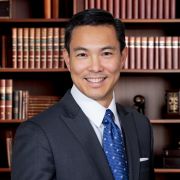
On November 04, 2026, SFC Chairman Dr Kelvin Wong delivered welcome remarks titled 'Beyond the Familiar: A Fresh Look at Asia' at the 'Conversations with Global Investors' forum of the 2026 Global Financial Leaders' Investment Summit in Hong Kong. The speech was subsequently published on the Securities and Futures Commission's website under the 'Published resources > Speeches' section.
The Concentration Risk and the Gravitational Pull of Familiarity
Dr Wong opened by acknowledging a remarkable concentration of global capital assembled in Hong Kong, before posing the central question: where will tomorrow's returns originate? He observed that over the preceding decade, investors had been disproportionately rewarded by a narrow constellation of markets and issuers, predominantly American in origin. He cautioned that success sustained across multiple years generates what he termed 'the gravitational pull of the familiar' — an inertia that subtly shapes portfolio construction, benchmark selection, and investor expectations alike.
Asian Market Divergence as a Source of Alpha
Dr Wong emphasised that no single Asian narrative exists; China, India, Japan, and Southeast Asia each present distinct cyclical dynamics, valuation frameworks, and engines of growth. He contended that while complexity is frequently interpreted by passive investors as risk to be mitigated, for active participants such divergence constitutes a source of alpha rather than merely an exposure to manage. The pertinent question he posed was not whether global portfolios should adopt a bullish stance on Asia per se, but whether they had adequately priced in the breadth and heterogeneity of the region's ongoing transformation.
The Broader Mandate of Active Investment
Dr Wong further elaborated that active investment serves functions well beyond alpha generation. Active investors scrutinise corporate fundamentals, interrogate management decisions, evaluate strategic direction and capital allocation discipline, and ultimately determine whether an issuer continues to merit their capital deployment. He stressed the dual nature of alpha: while active investors identify undervalued opportunities, disciplined active capital also contributes to the creation of superior companies through enhanced governance standards, stronger accountability mechanisms, and sustainable value generation — considerations he noted were particularly salient in Asian markets undergoing rapid structural transformation.
Hong Kong's Strategic Positioning as a Capital Hub
Dr Wong underscored Hong Kong's distinctive role in the global financial architecture. He maintained that the city should not be reduced to merely a transit gateway through which global capital flows en route elsewhere; rather, it is the jurisdiction where global investors come to understand Asia, price Asian assets, and participate in the region's transformation as partners rather than external observers. He posed the more difficult question of whether the investment playbook that proved so effective over the prior decade would be sufficient to capture the opportunities available in the next.
Forward-Looking Observations on a Fragmented Global Landscape
In closing, Dr Wong referenced a world characterised by geopolitical fragmentation, technological advancement outpacing regulatory frameworks, shifting correlation structures across asset classes, increasingly demanding private markets, and economies operating at materially different tempos across Asia. He concluded that active judgement, disciplined capital allocation, and the willingness to look beyond established paradigms would matter more — not less — in this environment, and that extraordinary opportunities were being written now in Asian markets.
View the full article:Source